
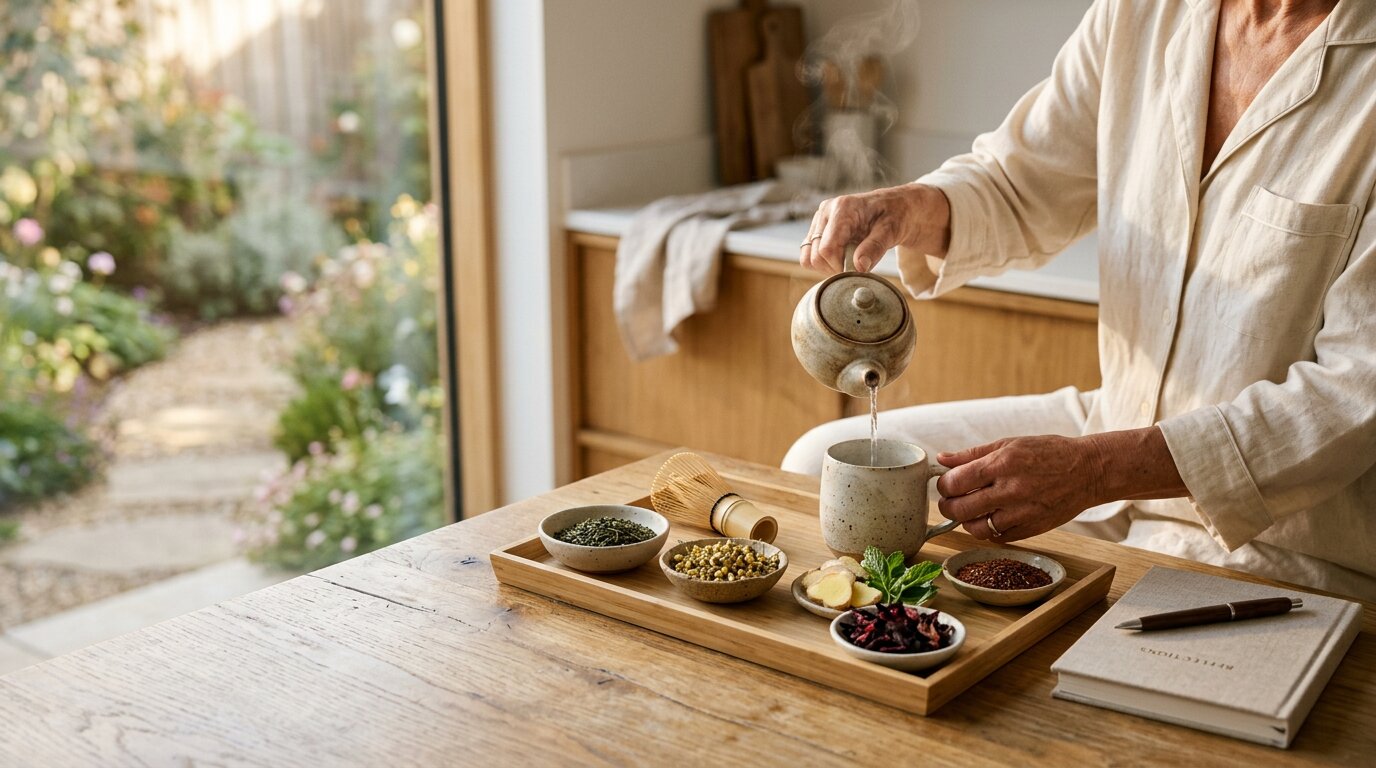
Healthy aging isn’t built on one single habit—it’s the result of small, consistent choices made over time. From how you move and sleep to what you eat and drink each day, these routines quietly shape how you feel now and how you age in the years ahead.
One of the simplest (and most enjoyable) habits to build into your day is drinking tea.
Across cultures, tea has long been associated with wellness, relaxation, and daily ritual. Whether it’s a calming cup in the evening or a refreshing start to your morning, tea offers more than hydration—it can support a slower, more intentional approach to healthy aging.
Why Daily Rituals Matter for Healthy Aging
When people think about longevity, they often focus on big changes or advanced interventions. But in reality, healthy aging is more often influenced by everyday habits.
Daily rituals help:
- regulate stress levels
- support hydration
- create consistency in routines
- encourage mindful pauses throughout the day
Chronic stress, poor sleep, and inconsistent habits can quietly affect how the body and brain function over time. Simple rituals—like preparing and enjoying a cup of tea—can act as small anchors that support balance and recovery.
Over time, these small inputs can make a meaningful difference.
The Best Teas for Healthy Aging
Different types of tea offer different benefits, making it easy to tailor your routine to your needs and preferences.
Green Tea and Matcha
Green tea is one of the most well-known options for supporting overall wellness. It contains natural compounds like catechins, which are often associated with antioxidant activity.
Matcha, a powdered form of green tea, offers a more concentrated experience and is often chosen for its smooth, steady energy and focus support.
Rooibos Tea
Rooibos is a naturally caffeine-free herbal tea that’s rich in plant compounds. It’s a great option for evening routines or for anyone looking to reduce caffeine intake while still enjoying a warm, comforting drink.
Its naturally mild, slightly sweet flavor makes it easy to incorporate into daily habits.
Chamomile Tea
Chamomile is commonly used as part of a wind-down routine before bed. It’s often associated with relaxation and may help support better sleep quality when used consistently.
Since sleep plays such an important role in recovery and cognitive function, a calming evening tea ritual can be a valuable addition to a healthy aging routine.
Ginger Tea
Ginger tea is a popular choice for digestion and overall daily wellness. Its warming, slightly spicy flavor makes it especially appealing during colder months or after meals.
It’s often used as a grounding, supportive drink that fits easily into a mindful lifestyle.
Peppermint Tea
Peppermint tea is refreshing and naturally caffeine-free. It’s commonly enjoyed after meals and can be a great option for an afternoon or evening break.
Its crisp flavor also makes it a good alternative to sugary drinks.
Hibiscus Tea
Hibiscus tea is known for its vibrant color and tart flavor. It’s often enjoyed iced or hot and can be a refreshing way to stay hydrated while adding variety to your routine.
Like many herbal teas, it offers a simple, plant-based way to support daily wellness habits.
Building a Daily Tea Ritual
Tea becomes most beneficial when it’s part of a consistent routine.
You might:
- start your morning with green tea or matcha instead of coffee
- take a midday tea break to reset and recharge
- wind down in the evening with chamomile or rooibos
- pair tea with a short walk, journaling, or quiet reflection
These moments don’t need to be long or complicated. Even five to ten minutes of intentional pause can help support stress management and mental clarity.
Lifestyle Habits That Support Healthy Aging
While tea can be a powerful addition to your routine, it works best alongside other supportive habits.
Healthy aging is often built on:
- consistent sleep schedules
- regular physical activity
- nutrient-dense meals
- proper hydration
- stress management and recovery
These foundational habits support not only how you feel day to day, but also how your body and brain function over time.
Where Nutritional Support Fits In
For some people, daily habits are complemented by targeted nutrition that supports overall wellness and long-term vitality.
This might include focusing on nutrient intake through whole foods, as well as exploring options that support a broader healthy aging supplement routine as part of a consistent lifestyle.
The goal isn’t to replace good habits, but to support them—creating a more complete approach to aging well.
A Simple, Sustainable Approach to Aging Well
Healthy aging doesn’t have to be complicated.
Often, it’s built through simple, repeatable rituals that bring consistency and intention into your day. Tea is one of the easiest ways to create that structure—offering a moment to slow down, hydrate, and support your body in a natural way.
Over time, these small habits can add up to something much bigger: a lifestyle that supports not just longevity, but quality of life along the way.